Prime Ministers of India
The Prime Minister is the head of the government and leader of the Council of Ministers. He is the chief of the executive branch of the Union Government. Since India's Independence in 1947, individuals of great calibre, with the passion to work for the country, have become Prime Ministers. Let's take a look at their life and work in the service of the nation.
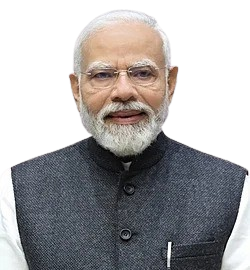
Shri Narendra Modi
Shri Narendra Modi is the current and the fourth longest-serving Prime Minister of India. He served as the Chief Minister of Gujarat for over 13 years,the fourth longest-serving instead of this write Longest serving elected Prime Minister and was applauded for the economic growth and setting up advanced infrastructure in the state, among other key developments. As the Prime Minister of India, he is known for campaigns like Swachh Bharat, Make in India, Digital India, among many more. Amongst his several accolades, he is also famous for being the first Indian to win the Seoul Peace Prize award in 2018.
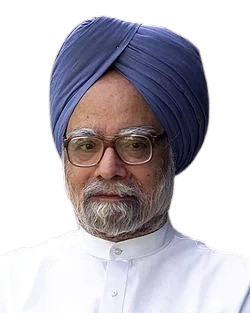
Dr. Manmohan Singh
Dr. Manmohan Singh served as Prime Minister of India from 2004 to 2014. The National Rural Employment Guarantee Act (NREGA) and the Right to Information Act were passed during his tenure as Prime Minister. Dr. Manmohan Singh is widely credited for efficiently carrying out economic reforms in the country. He is also known for signing the nuclear civil deal with the United States of America.
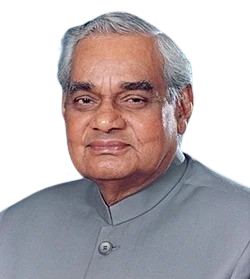
Shri Atal Bihari Vajpayee
Shri Atal Bihari Vajpayee served as Prime Minister of India for 13 days in 1996 and two incomplete terms from 1998 to 2004. He is known for his valuable contribution to India's economic growth. Operation Vijay, commonly known as the Kargil War, was fought against Pakistan and won during his tenure as Prime Minister. He made India a nuclear weapons power.
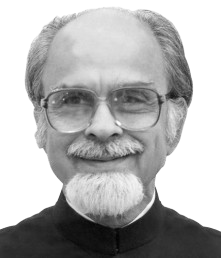
Shri Inder Kumar Gujral
Shri Inder Kumar Gujral became the Prime Minister for slightly less than a year. He worked with various ministries in different capacities before becoming the Prime Minister of India. He is known for the Gujral Doctrine, which is considered a milestone in India's foreign policy.
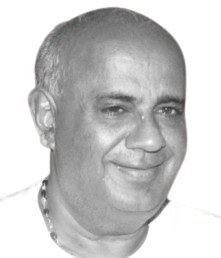
Shri H. D. Deve Gowda
Shri Haradanahalli Doddegowda Deve Gowda served as Prime Minister of India for slightly less than a year. He focused on the farmers of the country and is also credited for kickstarting the Delhi Metro project. He is popularly called the 'son of the soil' for his contributions to agriculture.
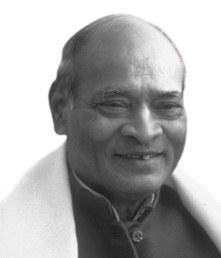
Shri P. V. Narasimha Rao
Shri Pamulaparthi Venkata Narasimha Rao served as Prime Minister of India for a single term from 1991 to 1996. During his tenure, he carried out landmark economic reforms in the form of liberalisation and globalisation.
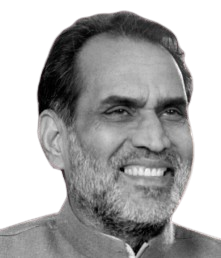
Shri Chandra Shekhar
Shri Chandra Shekhar became the first Prime Minister of India to head a coalition government at the centre. He was instrumental in preventing India from defaulting on sovereign repayments. Known for his fiery spirit, he was often referred to as 'Young Turk'.
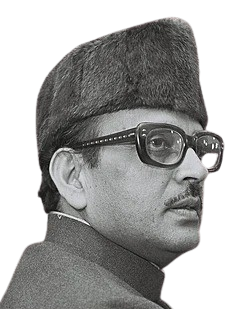
Shri V. P. Singh
Shri Vishwanath Pratap Singh served as Prime Minister of India from 1989 to 1990. The Mandal Commission Report was implemented and the Scheduled Caste and Scheduled Tribe Act of 1989 was passed during his tenure.
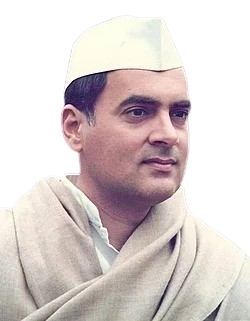
Shri Rajiv Gandhi
Shri Rajiv Gandhi became the youngest Prime Minister of India and served for a single term from 1984 to 1989. During his tenure, he promoted science & technology and associated industries, and ushered in a new era of higher education reforms in the country.
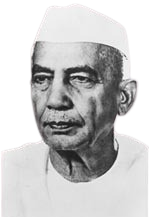
Chaudhary Charan Singh
Chaudhary Charan Singh served as Prime Minister of India for 170 days. Throughout his life he tried to improve the conditions of farmers. His birth anniversary, 23 December, is celebrated as Kisan Diwas.
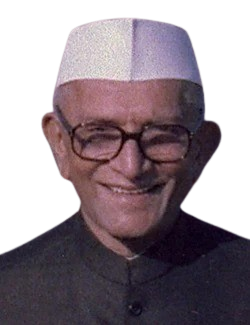
Shri Morarji Desai
Shri Morarji Desai served as Prime Minister of India for 2 years from 1977 to 1979. The Forty-fourth Amendment of the Constitution of India was enacted during his tenure as Prime Minister. Shri Morarji Desai passed away at the age of 99 in Mumbai, making him the world's oldest former head of government.
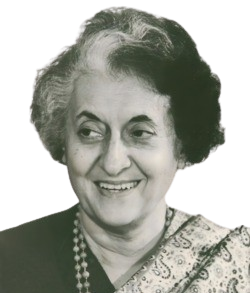
Smt. Indira Gandhi
Smt. Indira Gandhi was the first woman Prime Minister of India and served the nation for two terms. During her tenure, India won the 1971 war against Pakistan which resulted in the creation of Bangladesh. Smt. Indira Gandhi imposed emergency from 1975 to 1977.
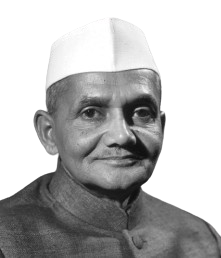
Shri Lal Bahadur Shastri
Shri Lal Bahadur Shastri was the third Prime Minister of India. As Prime Minister, he promoted the White and Green Revolutions and coined the popular slogan 'Jai Jawan, Jai Kisan'. He also led India to victory in the India-Pakistan war of 1965.
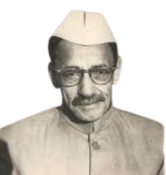
Shri Gulzari Lal Nanda
Shri Gulzarilal Nanda was the second Prime Minister of India and he served the nation for two brief terms. He was instrumental in organising the Indian National Trade Union Congress. He was awarded the Bharat Ratna, India's highest civilian award, in 1997.
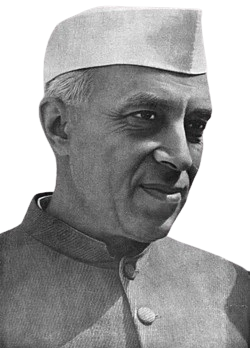
Shri Jawaharlal Nehru
Pandit Nehru served as Prime Minister for 17 years from 1947 to 1964. He is regarded as one of the founders of modern India as he helped usher the country into the age of industrial and technological development. His birth anniversary is celebrated as Children's Day across India.